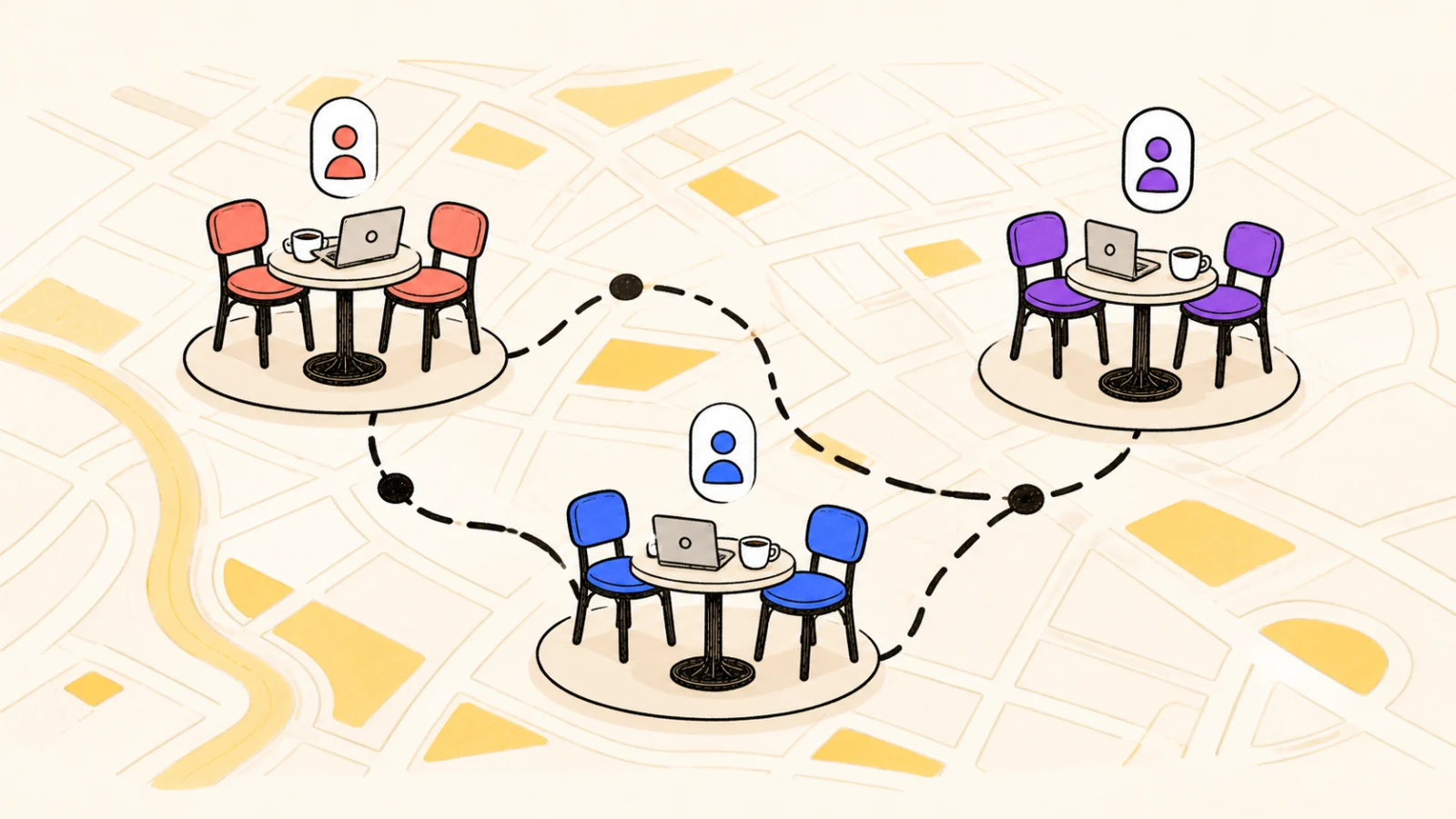
Founder networking works when you meet people around current work, learn enough to make a useful second conversation possible and follow through on the exact thing you offered. Choose rooms with a clear format, introduce the problem you are working on, ask specific questions and invite the right person to a small working session.
You do not need more contacts. You need a few people who recognize what you are building, how you work and when it makes sense to speak again.
decide what kind of network you need
Start with the work in front of you.
You may need:
- founders at a similar stage who can compare decisions;
- builders in the same city who want regular coworking;
- someone who understands your customer or distribution channel;
- a founder who has already solved one operational problem;
- peers who can share honest process without turning every meeting into a pitch.
Write one sentence: “I want to meet founders who are working through ___ because I want to compare ___.” That sentence helps you choose an event and recognize a useful conversation.
choose repeated rooms
One large conference can create introductions. Repeated small rooms create familiarity.
Look for coworking tables, focused workshops, founder breakfasts, demo nights and local accelerator events. Read the event page and confirm the audience, format, venue and time for conversation.
Skip vague access promises. A room that tells you what people will do gives you a better basis for meeting them.
introduce the current work
Use a short introduction that opens a question:
I am building ___ for ___. This week I am trying to figure out ___. What are you working on?
You do not need a slogan. The current problem gives another founder somewhere real to connect.
Ask questions such as:
- What are you trying to ship this month?
- Which decision keeps reopening?
- What surprised you after people used the product?
- What kind of introduction would actually help?
- Do you prefer talking through work or working beside someone?
Do not mine the conversation for confidential data. Let the other person choose what they share.
turn a conversation into a next step
A useful follow-up names the context and one action.
Good meeting you at the product workshop. You mentioned that onboarding handoff. Here is the checklist I promised. If you want, I work from the cafe near the station on Thursday morning and can compare flows for 30 minutes.
Send the resource you promised before asking for another favour. If there is no natural next step, let the conversation be complete.
use coworking to remove the performance
Coworking lets both founders demonstrate reliability without pitching. Agree on a time, place and work block. Each person names one task, works, then checks in at the end.
Start with a short session. Do not turn the first meeting into a cofounder trial, sales call or request for private access.
protect the relationship with boundaries
Before you share, decide what stays private: customer data, credentials, private financial information, confidential code and another person’s details. A useful network does not require instant access to everything you know.
Confirm permission before making an introduction. Explain why the two people may want to meet and let both say yes.
find a working table with founderhub
founderhub shows nearby founders and coworking tables on a map and lets people join or host a table. Choose what you share when you match or when someone RSVPs. Open the map, find one table that fits the work block you want and join with one task you plan to finish.
founderhub can make a local session easier to find. It cannot guarantee a cofounder, friendship, investment or business result.
a simple monthly rhythm
- Attend one repeated local room.
- Have three conversations about current work.
- Follow through on every specific promise.
- Invite one person to a small coworking session.
- Review which relationships felt reciprocal and useful.
Networking becomes a network when both people keep showing up with context.