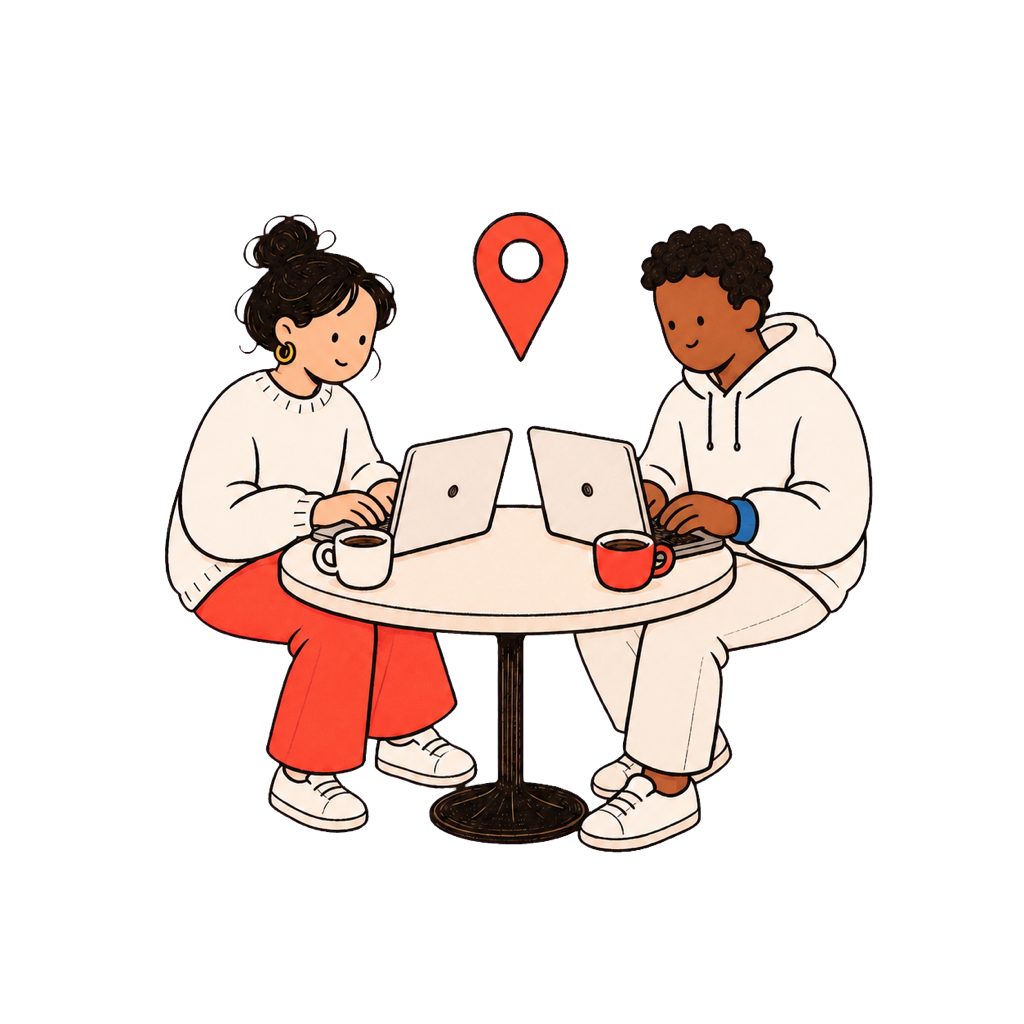
A coworking cafe is any café where you pull out a laptop and work alongside other remote workers. But the seat you pick, how long you stay, and the crowd around you decide whether you ship code or just move your anxiety to a new location. Here’s how to choose a spot that gets work done, follow the few house rules that keep a café happy to have you, and find a table of founders when you want company.
The seat you pick is the dealbreaker
You can’t do good work in a bad seat. The cafe might have glowing reviews for its cortado, but if the table wobbles and your spine curves into a question mark, you will leave frustrated. Walk in and assess three things before you order.
Check for a power outlet
You need at least one outlet within your cable’s reach. Not “probably” under someone’s bag. Not behind a locked plant. Actually vacant and accessible. If you don’t spot one, don’t sit down. Battery anxiety kills focus faster than a table of loud venture pitches. Cafés that welcome laptops often place power strips along walls or under communal tables, so scan the perimeter first.
Test noise with a single voice memo
Before you unpack, record 10 seconds of audio on your phone. Play it back. If the playlist feels like a blender fight with a toddler, pick a different corner or a different café. Some noise is fine, you want the hum of other workers, not silence, but a bad mix of blenders, espresso knocks, and phone calls makes deep work impossible. A local journalist assessing Portland coworking cafes found comfort and laptop-friendly layouts mattered far more than the coffee rating, and sound was a top reason someone stayed or left.
The table surface and chair
Your work surface matters. A thin round bistro table barely holds a laptop and a notebook. A long communal table gives you elbow room and space to spread out. The chair shouldn’t have armrests that dig into the table edge, and it shouldn’t tip backward. If you feel the chair’s design before you open your laptop, find another spot. You will spend hours there. Treat the furniture as part of your setup.
The etiquette that keeps you welcome
Café owners and staff don’t resent laptop workers. They resent laptop workers who act like tourists with a one-coffee ticket. Follow a few clear rules, and you will become a regular they’re happy to see.
Reorder at least once an hour. You’re renting the seat with food and drink, not with your charming open tabs. An espresso pulls a lot of labor and costs the house. So does the electricity, the wifi, and the warm space. A cup of drip coffee every two hours signals that you’re a guest, not a camper. The Eater guide on coffee shop work etiquette puts it bluntly: follow the house rules, order again, and don’t overstay.
Take phone calls outside. Nobody at the next table needs to hear your standup. If a call comes in, step out. Even a 2-minute sidewalk chat respects the room far more than a hushed monologue with your hand cupped around the phone.
Respect the time cap. Most cafés that welcome laptops don’t post an official time limit, but the real one is about three hours and a fresh order. Stay longer only during slow hours, and only after you’ve checked if the place is half-empty. Ask the barista, “Are you okay if I stay a bit longer while it’s quiet?” The question alone earns goodwill.
Time box your session before you get there
Open-ended café sessions lead to half-done work and a weird guilt about the empty plate. Before you walk in, decide exactly when you’ll leave. Two to three hours works for most people: long enough for a deep task, short enough to stay welcome.
Pick one main objective, not a whole sprint, but one well-defined piece of work. Ship a pull request. Outline a pitch. Finish the slide deck. When the time hits, close the laptop and go. If you need more time, move to another café or walk to a park bench and keep going. The change of scenery resets your brain more than a third refill.
Some founders work longer. A founder documenting a build-in-public day spent an entire afternoon studying at a coworking cafe after lab. Another logged 10 hours in a packed space. The key difference: they both kept ordering, and they both had a reason to be there beyond “working remotely.” Know your reason before you arrive.
Who else is at the table
A café full of workers changes the room. You look up from your screen and see someone deep in Figma, another writing code, a third annotating a contract. That visual matters. Working next to someone who is focused makes it easier to stay focused yourself, what many founders describe as body doubling. The presence of another person building something quietly makes you less likely to doomscroll.
But you don’t have to leave the people piece to chance. You can choose a table where founders already gather, or you can host one yourself.
Join a hosted table
Some cafés now have tables specifically for founders who want to work alongside others. You open an app and see a live map of who’s working nearby, what they’re building, and whether there’s an open seat. These aren’t networking mixers with name tags. They’re just tables of people shipping things.
One founder sat down at a café, and a stranger at the next table introduced himself. That conversation turned into a $5,000 deal. The same “stranger at the next table” dynamic happens every day, but most of us never know who’s working five feet away until someone breaks the ice.
Host your own table
You don’t need permission to host. Pick your favorite café, mark yourself as “hosting” on a map built for founders, and set a time window. Seats fill themselves. Other builders see your table, see what you’re working on, and join if it fits. You get a quiet coworking session with zero effort beyond showing up. No group chat, no coordinating schedules.
Get founderhub and your city becomes a live map of founders and tables. You can host a work session in four taps, join an open table within walking distance, and match with founders who share your build ethos. The iOS app is available, and the map you see is real people, not bots.
Is a coworking cafe right for you today?
A coworking cafe wins when you need the hum of other people but not the friction of a dedicated coworking membership. It loses when you need perfect quiet, dual monitors, or a guaranteed seat for more than three hours. Pick the right day: calendar-heavy days don’t work; deep-work days with one clear output do.
If you want company, skip the guesswork. A builder recently shipped a global cafe and coworking map app because the need is real. But the simplest move is already on your phone. Open the map, see who’s working nearby, and just go sit down. That’s the whole play.
**** Get founderhub. Real founders on a real map. Join or host a table this afternoon.