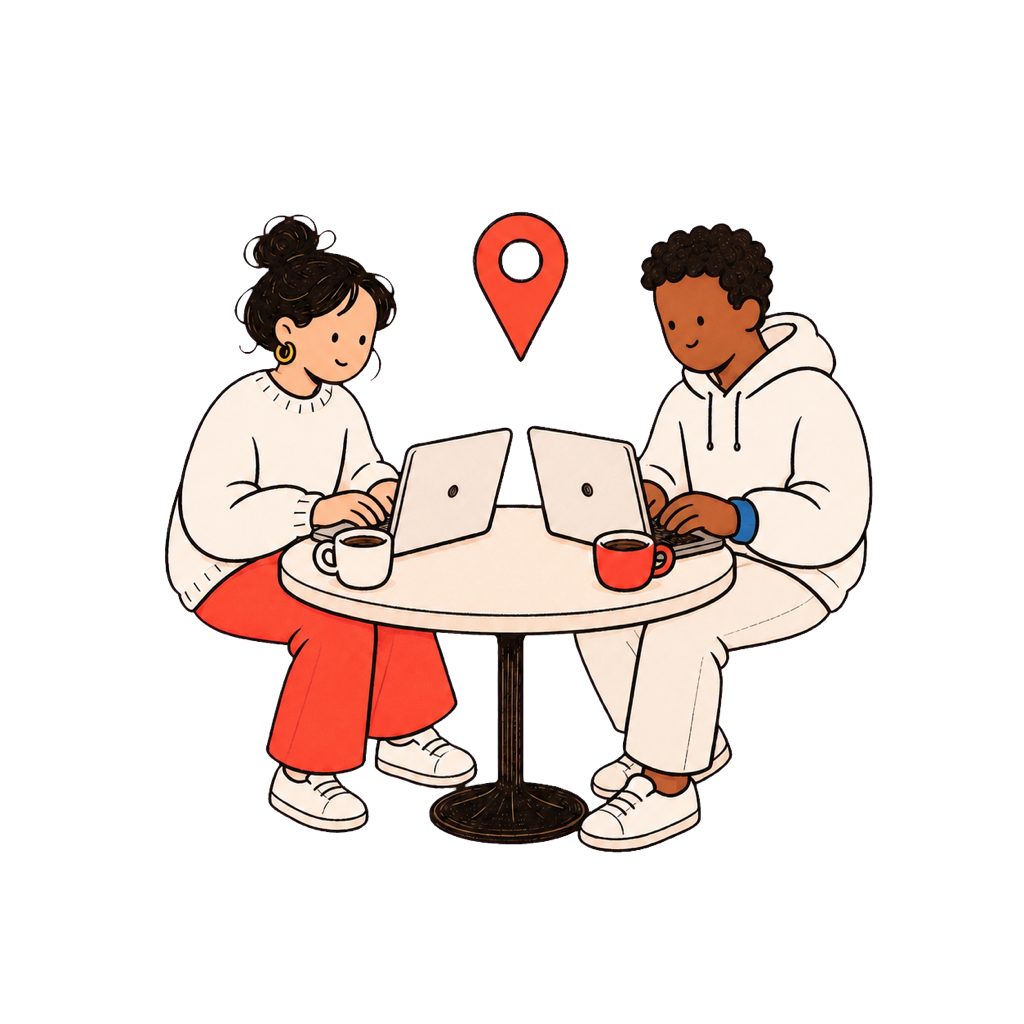
body doubling is doing work you would normally do alone while another person is in the room, or on a video call, working on their own thing. they do not coach you. they do not check your progress. they just exist nearby, and that silent presence makes starting and staying on task feel easier.
you open your laptop at the cafe. the person across from you is already typing. you do not know them. you never speak. but for the forty minutes you sit there, you finally finish the pitch deck you have been avoiding for two weeks. that is body doubling.
what body doubling actually is
the term comes from the ADHD community, where it describes a trick for getting past task paralysis. adult attention deficit disorder association (ADDA) explains it as having another person in the room while you complete a task you would otherwise put off. the body double does not participate. they do not remind, prompt, or even pay attention. they are simply present.
the mechanism is straightforward: an occupied room tricks your brain into a "work is happening here" context. the presence of another person doing something focused reduces the activation energy you need to begin your own work. as Cleveland Clinic notes, the external accountability of another person just being there can help you initiate a task, even if they never say a word.
practically, body doubling takes a few forms:
- silent co-working: you and a friend (or stranger) sit at the same table, each working on your own task, no conversation.
- virtual body doubling: a video call where both people mute themselves, leave cameras on, and work. platforms like Focusmate built a business on this exact setup.
- public-space doubling: working in a library, cafe, or co-working space where the ambient presence of other focused people serves the same function.
the wikipedia entry on body doubling confirms the practice is also called parallel working and that long-term efficacy studies remain limited. we know it works for many people right now. we do not yet have a decade of controlled trials.
a small scene, because the definition sounds too clinical
you sit down at a founderhub cafe table in Brooklyn. three other founders are already there, headphones on, typing. no one introduces themselves. a fourth person arrives, orders a cold brew, and opens their laptop. ninety minutes later, you have shipped the feature you have been rewriting in your head all month.
no one told you to work. no one inspected your screen. you just did it because the room was full of people doing their thing, and that signal was louder than the voice in your head that normally says "later."
what body doubling is not
confusion creeps in when people compare body doubling to coaching, mastermind groups, or accountability check-ins. they are not the same.
- coaching: a coach gives strategic advice, asks questions, and pushes you toward goals. a body double gives you absolutely no input.
- mentoring: a mentor shares experience. a body double may not even know what you do. they are just there.
- accountability check-ins: a partner asks "did you do what you said you would?" by a certain time. body doubling replaces the verbal check-in with ambient presence. no one asks anything.
- networking: you might naturally meet someone before or after a silent work session, but the session itself is zero-networking. the goal is focus, not conversation. if you try to chat during the block, you break the mechanic.
the confusion persists because all of these involve other people. the defining line is this: in body doubling, the other person does not interact with your task. they do not even need to know your name.
does body doubling only work for adhd?
the practice emerged from ADHD communities, but you do not need a diagnosis to benefit. the neurodivergent collective points out that body doubling helps anyone who struggles with task initiation, focus, or procrastination, regardless of whether those struggles are clinical.
founders, in particular, often work alone for long stretches. no manager sets deadlines. no office rhythm signals "we are working now." for a solo founder, body doubling provides a quiet container that mimics the office hum without the office politics.
how to try body doubling today
start small. you do not need a formal program or a dedicated app, though those exist (we built one for founders, more on that in a moment).
1. pick a task. choose something you have been avoiding and can complete in under an hour. admin backlog, a design review, that one email.
2. find a person. text a friend: "want to co-work silently at cafe tomorrow, 8am?" or, if you prefer digital, join a free virtual co-working room. the only requirement: the other person must be working too.
3. agree on the container. say out loud what you will work on, set a timer, and go silent. if you are in person, keep headphones on. the entire point is no conversation during the block.
4. do not overcomplicate it. no check-in at the end is required. the session is enough. you worked. you are done.
body doubling in real life, with other founders
virtual body doubling works, but in our experience building founderhub, an irl table hits differently. when you can see three other founders shipping next to you in a cafe, the ambient energy is stronger than a muted zoom square.
founderhub lets you host or join a public co-working table in four taps. you open the map, pick a table at a nearby cafe, and show up. the table has a small handwritten sign (you can make one in the app) that signals "silent work block for founders." the strangers who sit down know the deal. you work. you leave.
no networking pressure. no mastermind. just parallel work with people who understand why you are building.
if you want to go deeper on body doubling for founders specifically, we wrote a separate guide: body doubling for founders. and if you have never co-worked with strangers before, the coworking with strangers guide walks through the social norms so you do not feel weird.
the only rule that matters
body doubling works because the other person is present but not involved. if you break that rule (by turning it into a chat or a status update), you lose the effect. keep it silent, keep it parallel, and you will finish work you thought you would never start.